SCF 2019 Keynote
Keynote 1: Revised Prespectives on IoT
Keynote Speaker: Samee U. Khan, North Dakota State University and National Science Foundation
Abstract: Our lives are constantly being driven by decisions supported by data generated by myriad of devices (or things) connected to the Internet. These “things” as they are called, come in various shapes, sizes, and capabilities. In this talk, we will revisit some of the core concepts related to the Internet of Things. In the latter portion of the talk, we will revist some relavant National Science Foundation programs pertaining to the various domain topics discussed.
About the Speaker
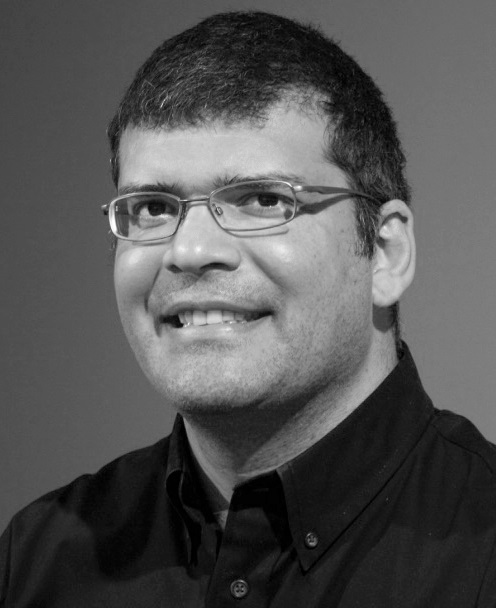
Samee U. Khan received a PhD in 2007 from the University of Texas. Currently, he is the Cluster Lead for the Computer Systems Research at the National Science Foundation, and a Full Professor at the North Dakota State University. His research interests include optimization, robustness, and security of computer systems. His work has appeared in over 400 publications. He is on the editorial boards of leading journals, such as Journal of Parallel and Distributed Computing, ACM Computing Surveys, and IEEE IT Pro. He is an ACM Distinguished Speaker and an IEEE Distinguished Lecturer.
Keynote 2: Recent Developments in Deep Learning Research
Keynote Speaker: Yi Pan, Regents’ Professor and Chair, Department of Computer Science, Georgia State University, Atlanta, Georgia, USA
Abstract: Neural networks, modeled after the human brain, contain a set of algorithms to recognize patterns via training a data set. Deep learning neural network architectures differ from traditional neural networks because they have more hidden layers and newer training algorithms. Deep learning networks can be trained in an UNSUPERVISED or SUPERVISED manner for both UNSUPERVISED and SUPERVISED learning tasks and hence can be applied in many applications. Deep learning is now producing many remarkable successes in computer vision, automatic speech recognition, natural language processing, audio recognition, bioinformatics and disease prediction and detection. Although various deep learning architectures and novel algorithms have been applied to many big data applications, better explainability, increasing prediction accuracy and speeding up the training process are still challenging tasks among others. In this talk, I will outline recent developments in deep learning research. The topics discussed include proposing more effective architectures, intelligently freezing layers, effectively handling high dimensional data, designing encoding schemes, mathematical proofs, optimization of hyper-parameters, embedding logic and reasoning during training, result explanation and hardware support for deep learning. Some of our solutions and preliminary results in these areas will be presented and future research directions will also be identified in this talk.
About the Speaker
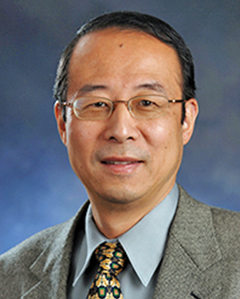
Dr. Yi Pan is currently a Regents’ Professor and Chair of Computer Science at Georgia State University, USA and a Member of EU Academy of Sciences. He has served as an Associate Dean and Chair of Biology Department during 2013-2017 and Chair of Computer Science during 2006-2013. Dr. Pan received his B.E. and M.E. degrees in computer engineering from Tsinghua University, China, in 1982 and 1984, respectively, and his Ph.D. degree in computer science from the University of Pittsburgh, USA, in 1991. His profile has been featured as a distinguished alumnus in both Tsinghua Alumni Newsletter and University of Pittsburgh CS Alumni Newsletter. Dr. Pan's research interests include parallel and cloud computing, big data, and bioinformatics. Dr. Pan has published more than 250 journal papers with over 90 papers published in various IEEE journals. In addition, he has published over 150 papers in refereed conferences. He has also co-authored/co-edited 43 books. His work has been cited more than 10,000 times in Google Scholar and his current H-index is 53. Dr. Pan has served as an editor-in-chief or editorial board member for 20 journals including 7 IEEE Transactions. He is the recipient of many awards including IEEE Transactions Best Paper Award, several other conference and journal best paper awards, 4 IBM Faculty Awards, 2 JSPS Senior Invitation Fellowships, IEEE BIBE Outstanding Achievement Award, NSF Research Opportunity Award, and AFOSR Summer Faculty Research Fellowship. He has organized many international conferences and delivered keynote speeches at over 60 international conferences around the world.
Keynote 3: The Millibottleneck Theory of Millisecond-Scale Performance Bugs and Its Experimental Verification
Keynote Speaker: Calton Pu, Professor and John P. Imlay, Jr. Chair in Software, School of Computer Science, Georgia Institute of Technology, USA
Abstract: Web-facing applications have complex deployment dependencies and stringent quality of service requirements, e.g., 99.9% of requests with response time within 0.5 seconds. However, despite continued efforts by industry and academic researchers, the latency long tail problem, where a non-trivial fraction of Very Long Response Time (VLRT) requests return after a few seconds, remains a serious research and practical challenge. Latency long tail happens even when the system utilization is still very far from saturation (e.g., 40-60% average CPU utilization). Using automated n-tier application benchmarks, we have reproduced several cases of these VLRT requests (e.g., due to JVM garbage collection and VM-based application consolidation), caused by millibottlenecks (resource saturations that last only tens to hundreds of milliseconds). The Millbottleneck Theory explains these VLRT requests in a model with two parts. First, a resource millibottleneck is created, and it propagates through a chain of dependencies among system components, accumulating queuing effects that end in VLRT requests. We have released the MilliMonitor toolkit, which is capable of 50ms sampling periods and detailed event monitoring to enable the detection of millibottlenecks and the tracking of chain of dependencies that end in VLRT requests. We will describe a methodical approach to find new millibottlenecks and their chain of dependencies, so we can remove the sources of VLRT requests and improve overall system utilization in data centers while preserving high quality of service.
About the Speaker
Calton Pu was born in Taiwan and grew up in Brazil. He received his PhD from University of Washington and served on the faculty of Columbia University and Oregon Graduate Institute. Currently, he is holding the position of Professor and John P. Imlay, Jr. Chair in Software in the College of Computing, Georgia Institute of Technology. He has worked on several projects in systems and database research. His contributions to systems research include program specialization and software feedback. His contributions to database research include extended transaction models and their implementation. His recent research has focused on automated system management in clouds (Elba project), information quality (e.g., spam processing), and big data in Internet of Things (GRAIT-DM project). He has collaborated extensively with scientists and industry researchers. He has published more than 70 journal papers and book chapters, 280 conferences and refereed workshop papers. He served on more than 120 program committees, including the co-PC chairs of SRDS'95, ICDE’99, COOPIS’02, SRDS’03, DOA’07, DEBS’09, ICWS’10, CollaborateCom'11, ICAC’13, CLOUD’15, BigData Congress’16, CIC’16, and co-general chair of ICDE'97, CIKM'01, ICDE’06, DEPSA’07, CEAS’07, SCC’08, CollaborateCom’08, World Service Congress’11, CollaborateCom’12, IEEE CIC’15, and ICDCS’17. He is a Fellow of AAAS and IEEE.
Keynote 4: Resilient IoT for Community Scale Services
Keynote Speaker: Nalini Venkatasubramanian, Department of Computer Science, University of California, Irvine, USA
Abstract: Advances in technology mobile computing, cyberphysical systems, Internet-of-Things, cloud computing and big data technologies are making available new modalities of information and new channels of communication. It has enabled the interconnection of objects and data to provide novel services that are changing the landscape of cities and communities worldwide. Technologies and services are being rapidly created and repurposed as needed to improve and enrich daily lives of citizens in homes and workplaces. Community lifelines that provide basic utilities such as shelter, food, water and energy are being transformed by technology, but responsible deployment requires an understanding of the vulnerabilities introduced by new technologies. For example, during large scale disasters and unexpected events such as fires, floods and earthquakes, infrastructure and services are disrupted. The ability to ensure resilient operation under small events and large disasters requires intelligent data collection and data exchange from diverse devices and data sources and interpretation of this information for higher level semantic observations. Drawing on our recent efforts in smartspaces, smart firefighting and smartwater infrastructures, I will discuss the role of IoT and middleware integration technologies to generate situational awareness. The ability to combine novel technologies at multiple layers will open up new possibilities for resilient and scalable communities of the future.
About the Speaker
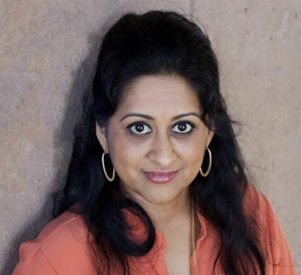
Nalini Venkatasubramanian is currently a Professor in the School of Information and Computer Science at the University of California Irvine. She has had significant research and industry experience in the areas of distributed systems, adaptive middleware, pervasive and mobile computing, cyberphysical systems, distributed multimedia and formal methods and has over 250 publications in these areas. As a key member of the Center for Emergency Response Technologies at UC Irvine, Nalini's recent research has focused on enabling resilient and sustainable communities using IoT/CPS technologies. In particular, her research addresses scalable observation and analysis of situational information from multimodal input sources; dynamic adaptation of the underlying systems to enable information flow under massive failures and the dissemination of rich notifications to members of the public at large. She is the recipient of the prestigious NSF Career Award, multiple Undergraduate Teaching Excellence Awards and best paper awards. Prof. Venkatasubramanian has served in numerous program and organizing committees of conferences on middleware, distributed systems and multimedia and on the editorial boards of journals. She received and M.S and Ph.D in Computer Science from the University of Illinois in Urbana-Champaign. Her research is supported both by government and industrial sources such as NSF, DHS, ONR, DARPA, Novell, Hewlett-Packard and Nokia. Prior to arriving at UC Irvine, Nalini was a Research Staff Member at the Hewlett-Packard Laboratories in Palo Alto, California.
About the Services Society
The Services Society (S2) is a non-profit professional organization that has been created to promote worldwide research and technical collaboration in services innovations among academia and industrial professionals. Its members are volunteers from industry and academia with common interests. S2 is registered in the USA as a "501(c) organization", which means that it is an American tax-exempt nonprofit organization. S2 collaborates with other professional organizations to sponsor or co-sponsor conferences and to promote an effective services curriculum in colleges and universities. The S2 initiates and promotes a "Services University" program worldwide to bridge the gap between industrial needs and university instruction. The Services Society has formed 10 Special Interest Groups (SIGs) to support technology and domain specific professional activities.
Contact Information
If you have any questions or queries on ICWS 2019, please send email to icws AT ServicesSociety DOT org.
==================================================================
You are welcome to join our social network on LinkedIn at https://www.linkedin.com/groups/6546793.